New Paintings, Rock Stars In London and “Buried Child”

Painting progress: I feel a bit like I’ve lost my mojo when it comes to painting. It seems like I’ve been doing it less. I’ve been working on three things: (1) a portrait of my Uncle Bill, where I am having trouble capturing his smile and the twinkle in his eye, (2) a painting of a tennis player that I’ve been meaning to do for a while but now that I am doing it, I’m wondering why and (3) a landscape vaguely based on a painting I saw at a museum in Paris, using gouache paints that Karen Fried gave me a year ago. It’s been fun trying a new medium, but it is taking a while for me to figure out how it works. I’m actually closing in on completing all three of them.

As it turns out, since drafting this, I did finish the portrait of Bill. He and his wife Marie were very close to my parents and in a lot of ways, he was like a second father for us. He was an amazing guy. He could walk into a room or a bar and within 20 minutes would be friends with everyone in the room. A quick Bill story (there are so many): We showed up at my parent’s house for Thanksgiving or some other Mahoney family reunion and it was a big Mahoney turnout. Judie had never met any of them and was understandably nervous. Bill picked up on this instantly and took us around, introducing us as “Judie and her boyfriend Nick”, a cute juxtaposition that relaxed everyone. Here is the painting. I still did not capture the twinkle in his eye or his mischievous grin, but it’s close (and probably as good as I can do).

uncle-bill

Frideric and Jimi: On the last day that Peter and Andrea were in London, we went to the Handel and Hendrix Museum. Frideric Handel lived in this house on Brook Street in Mayfair from 1723 to his death in 1759. This was the period of Handel’s greatest popularity and power. He really was the rock star of the period. His house has been restored and decorated with period paintings and furniture and some lovely musical instruments. They occasionally have concerts there, as Handel certainly did during his lifetime. You can see where his bedroom was and where he entertained notables of the day and rehearsed with singers.

A little over 200 years after his death, Jimi Hendrix rented a third floor flat in the same building (different entrance) shortly after arriving in England to become incredibly famous. A museum celebrating all of this opened a year ago immediately above the Handel one. Hendrix lived there with his girlfriend for a couple of years, composing, playing and partying. He actually became interested in Handel and bought some albums of his music. All sorts of famous musicians visited him there to jam, hang out and sometimes crash in a spare room. They have recreated his bedroom, based on photos from the time. Hendrix was interested in design and spent a fair amount of time shopping for rugs and other things to decorate the flat. His girlfriend, who left him in about 1969, possibly upset by his drug use, has lived the last 40 something years in Australia, but has come back and donated a few items. There are videos, music, what purports to be Jimi’s record collection, some guitars, etc.

It is a wonderful coincidence that these two superstar musicians lived in the same place. Little things like this are what make London so much fun.

“Buried Child”: We went with Peter and Andrea to see “Buried Child”, a play by Sam Shepard, which won the Pulitzer Prize for Drama in 1979, catapulting his career into the stratosphere. The play is largely centered around the character Dodge, played by (the) Ed Harris, in what I understand is his first London appearance. When you enter the theater, Dodge is already on the couch in a run-down house, coughing and having sips of whiskey. He stays on that couch for entire play, except for times when he ends up on the floor. He is sitting in Middle America waiting to die, his sons are disappointments, his farm is not productive (and hasn’t been for years), he has dark secrets that haunt him and his wife no longer loves him (and hasn’t for years). It’s quite a part and Ed Harris is quite brilliant in the role. His real-life wife, Amy Madigan, plays his wife in the play. She is the strongest figure in a family of men who have been broken one way or another. In the first act, you think at least one person in this family (her) isn’t crazy. In the last act, you find out you are wrong. Upsetting this disturbing apple cart is the surprise visit of Dodge’s grandson Vince, who comes with his girl friend Shelly and then leaves her there when he ostensibly goes to buy whiskey for Dodge but does not return. Shelly, ferociously portrayed by Charlotte Hope, proceeds to expose the dark secrets that have tormented Doge and his family for many years. You eventually discover that Dodges wife had a child with Tilden, Dodge’s now demented son, and that Dodge eventually killed the baby and buried it (thus the title), driving Tilden over the edge.By the end of the play, Dodge has died (but is still next to the couch), Vince is back and is going to stay (but Shelly has enough sense to leave) and Tilden has dug up the baby. This is a powerful and deeply disturbing play that is very well written and sublimely acted and produced. It was not exactly fun to watch, but I won’t forget it. Although it is set in the malaise of the Ford-Carter years on the 1970s, I think the sort of desperation and sense of failure and loss that permeates the play should have resonance in these days of Trump and Brexit. This was once a functioning family with a working business and dreams. Now that is all gone. They may not be a Trump/Brexit voters, but they fits the caricature.

Closing words: Last Sunday, I did the reading at New Unity. It was poem called “”If You Could”by Danny Bryck. I thought it was timely and powerful. Follow this link: if-you-could
London Tales

Stoke Newington: On Monday, I went to Stoke Newington. My reason was to pick up a print of Mary Wollstonecraft in support of a drive to have a statue of her erected on Newington Green. (It really is shocking that she is not honored more in London and surprising that some rich woman has already funded a tribute to the Mother of Feminism.) The other reason for going there is that I have been curious about Stoke Newington, which I understand to be a fashionable, furiously gentrifying section of London. (And I can get there by just taking the 67 bus, which stops right outside the flat.) The part that I went to in order to get the print was very nice, with streets of two story connected houses and the sounds of power equipment indicating that renovations were in full swing. There was also an area of well-maintained estate housing (public housing in the US). As I walked north, the buildings got a bit grander and bigger, but a chilly rain started, so I decided to go back to the High Street and either find a place to eat lunch or go home. The High Street in the southern part of Stoke Newington was certainly bustling, but had more of a working class vibe. There were a lot more nail salons, hairdressers and kebab shops as oppose to barristas, galleries and cute restaurants. It appears that the ongoing gentrification that I’d heard about must be in the northern part of Stoke Newington. I thought about walking up there to check it out, but I was cold and wet and decided to leave it for another, sunnier day.

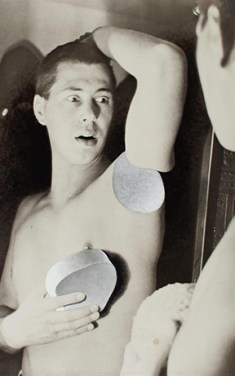
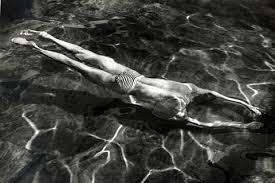
Elton John: Photography Collector: On Tuesday, I went to Tate Modern, where there was an exhibit of photographs from Elton John’s collection, which is one of the largest in the world. This one concentrated on his photos from the Modernist Period, basically 1915-1950. The audio tour featured Sir Elton himself talking about the selected photographs. It was pretty fascinating. It turns out that he began collecting photos in 1991, shortly after becoming sober and became obsessed by it. He now has thousands of photos. Early on, he set a record for the most ever paid for a photograph (since repeatedly broken). See below. It is tiny, taken by André Kertész in 1917, and inspired a generation of photographers, including all of the gay photographers who followed. Elton bought the original picture and the negative. The exhibit is full of iconic images, like Dorothea Lange’s “Migrant Mother”, lots of Man Ray photo-portraits and Weston, , Cunningham, etc. It is spectacular and it is just the tip of the iceberg that is his collection. At one point, he reveals that he has thousands of photos from 9/11, which they bring out every year to see if they should exhibit them. But they decide that, though they are beautiful, it is too soon. One more really amazing thing. Below is a manipulated photo entitled “Humanly Impossible”. In it, the photographer printed out the image and them added things that made it appear that his arm was cut off. He then re-photographed it. and all prints are of the second shot. Except Elton’s. He has the original print with the additions.

images.jpg    Herbert_Bayer,_Self_Portrait-xlarge_trans++1LE_aMoZ4j8b9yBU3fkF9-pCkqavLOFjGjHu2VCbiLk.jpg

A Brexit Note: Judie is a member of the Emerging Payments Association here in London. They represent and advise Fin Tech companies here in London and elsewhere. On Wednesday, they released a report on where they recommend their clients move in light of Brexit. (As you may know, such companies can currently “Passport” their UK license to the EU and need not go through the process of getting a license on the continent. It seems likely that this will end with Brexit. And whether it will or not, nobody can tell, so businesses have to begin taking steps now.) So the EPA was advising on how firms currently in London should consider moving some of their operation to Europe to avoid any Brexit related complications. On one level, this is not terribly big news if you are in the industry or even familiar with banking issues. But I’d say it is significant in that here is a British firm giving advice that will lead to loss of tens of thousands of jobs. Since May and the Conservatives have done little and said less about Brexit in the last six or seven months, it seems like everything has been conjecture. But this is real advice to real firms with real consequences. Of course, the papers didn’t cover it.

Things I Am Going To Miss About London: Taking a bus over London Bridge, getting off, wandering through Borough Market, stopping to get something to eat or buy something for dinner, then going out to the Thames and walking up past the Globe Theatre to the Tate Modern, going in a seeing an exhibit or two, then walking over the Millennium Bridge, checking out both the incredible views and the gum paintings under my feet and the ending up at St. Paul’s.

The Deserving Poor: In the Victorian era, George Peabody, an American merchant, established a trust to build housing for the “deserving poor”. The distinction between deserving and undeserving poor was a big concept in that era (and is an idea that was picked up by Republicans and US conservatives in the 1960s). It turns out that the first such housing that was constructed is directly across the street from our flat, although there is lot of housing for the deserving poor in the area, which has always had a large share of poor people, both deserving and underserving. Of course, if you are like me, you cannot hear that phrase without thinking of Alfred Doolittle’s speech to Henry Higgins, with which I will close this post:

Doolittle: What am I, Governors both? I ask you, what am I? I’m one of the undeserving poor: that’s what I am. Think of what that means to a man. It means that he’s up agen middle class morality all the time. If there’s anything going, and I put in for a bit of it, it’s always the same story: ‘You’re undeserving; so you can’t have it.’ But my needs is as great as the most deserving widow’s that ever got money out of six different charities in one week for the death of the same husband. I don’t need less than a deserving man: I need more. I don’t eat less hearty than him; and I drink a lot more. I want a bit of amusement, cause I’m a thinking man. I want cheerfulness and a song and a band when I feel low. Well, they charge me just the same for everything as they charge the deserving. What is middle class morality? Just an excuse for never giving me anything. Therefore, I ask you, as two gentlemen, not to play that game on me. I’m playing straight with you. I ain’t pretending to be deserving. I’m undeserving; and I mean to go on being undeserving. I like it; and that’s the truth. Will you take advantage of a man’s nature to do him out of the price of his own daughter what he’s brought up and fed and clothed by the sweat of his brow until she’s growed big enough to be interesting to you two gentlemen? Is five pounds unreasonable? I put it to you; and I leave it to you.

Higgins: Pickering, if we were to take this man in hand for three months, he could choose between a seat in the Cabinet and a popular pulpit in Wales.

You’ve got to love Bernard Shaw!

Chris Visits: Part 2-Museums and Theatre

You Say You Want a Revolution?: This was a special exhibit at the Victoria & Albert Museum that got great reviews. It’s basic idea is that the 1960s music and culture changed the world in various ways (feminism, ecology, computers, etc.). It could easily be criticized as a bit Boomer-centric in its pitch, but I think it did capture something about the excitement and feeling of possibilities that were so prevalent in the 1965-1970 period. And the collection of stuff that was in the exhibit was very impressive. There were so many amazing artifacts of the era, that it is hard to pick out any one to talk about here. I was afraid, as we walked through the first gallery, that the whole thing would be about American culture. But, when you think about it, that whole explosion of music and cultural change were at least as big in London, so a lot of the exhibit was about looking at the parallels in what was happening, especially between London and San Francisco. Everyone who attended got an audio set, which automatically picked up different music and other clips as you walked around. So for each subject, you automatically heard music that was appropriate to the gallery that you were in, which worked great. There were lots of album covers and books, which were real trips down memory lane. Chris and I both commented that we felt like we had read many of the books and either owned or knew someone who had a majority of the albums. It was a wonderful multimedia experience, dipped in huge dollops of nostalgia. Walking through it, looking at the various kids and young people checking it all out, I couldn’t help thinking how weird it was that a part of my life is now thought of as history. Ultimately, the final feeling was a sort of regret for me. There had been this feeling, expressed in the exhibit, that there was a real revolution taking place and that, after the sixties, the world was going to be a different and better place. Anything seemed possible, which was made that who time so exciting, but, in the end, the change that occurred was just incremental.

“Oil”: This was a play at Almeida Theatre. I’d never been there, although I knew the neighborhood since it was a block away from New Unity’s Islington building, where I often go for meetings. The play was written by Ella Hickson, a playwright with a good resume and directed by Carrie Cracknell, coming off directing “The Deep Blue Sea” at the National Theatre. And it starred Anne-Marie Duff, who is spectacularly talented (and who I saw last fall in “Husbands and Sons”). But it turned out to be one of those “nice try”sort of productions. It was a series of scenes, most of them pretty good. But each of the scenes were more like mini-plays than part of one coherent story. All were vaguely related to oil and they all featured a mother (Duff) and her daughter (Yolanda Kettle). The two leads were great and supported by a wonderful cast. But the play covers a period of about 150 years, so while the mother and daughter are in each scene (the daughter is in utero in the first), their characters are not consistent and don’t exactly grow in any meaningful way. And the somewhat apocalyptic final scene, when it appears that oil has run out, was trying a bit too hard to make some sort of point about oil. The whole thing was not completely unenjoyable and there were enough good moments and fine acting that it gave you some hope, it ultimately never came together and was just a frustrating mess. Too bad.

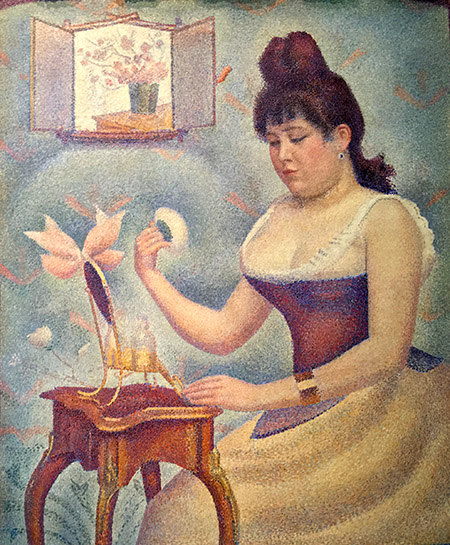
A History of Art in an Afternoon: On Wednesday, we went to Somerset House and the Courtauld Institute. Somerset House is an amazing palace near the Thames. Now it is probably best known for the traditional ice skating there in the Holidays. There is, of course, a great history. The land was given to Jane Seymour’s brother by Henry VIII and Elizabeth I lived there when Mary was Queen. For more history, you can look here if you’re interested. The Courtauld Institute was begun in 1932 and is based on the art collection of Samuel Courtauld, who had a particularly amazing incredible set of Impressionist paintings, with a number of truly iconic canvasses. Going to these sort of galleries always inspires me to go and paint, so I took a lot of photos while I was there. Below is a Seurat painting called “Young Woman Powdering Herself”. It is of his twenty-year old lover, who was pregnant when the portrait was done. It dawned on me that this is “Dot” from “Sunday in the Park with George”! If you are a fan of that musical, as I am, you’ll be interested in seeing this.

dot

The other interesting thing about this painting is that there was an infrared scan done by conservators, which revealed that under that picture of flower in the upper left is the only known self-portrait of Seurat. It is said that a friend made fun of it, so he painted over it. That sounds like the George you get to know through Sondheim.

While we were walking through the galleries, Chris mentioned that Impressionism is his favorite genre of painting and that he doesn’t really like anything that followed it. So I took him to the Abstract Expressionism exhibit at the Royal Academy. It is a bit of a Greatest Hits exhibition of the greatest artists of the period, which made the art hard not to like. I do suspect that second-tier Abstract Expressionist works would not be as enjoyable to view as lesser Monets and van Goghs, and, in that respect I agree with Chris that Impressionism is a greater period. But it was fun to follow one with the other, especially since it was possible to see the progression from one to the other.

“Lazarus”: That evening, we went to see “Lazarus”, the David Bowie musical which has just arrived from its sold-out premier at the New York Theater Workshop (where Judie and I were long-time donors, referred to as Repeat Defenders). I was quite surprised to be able to get tickets, especially since Bowie is an even bigger deal here than he is the States. As you may know, the musical is based on the book and movie “The Man Who Fell to Earth”, which I had unfortunately never seen or read. (I might have been able to figure out what was happening easier.) Most of the music was specifically written for the musical, although there are a few Bowie hits like “Changes” and “Heroes”. It was directed by Ivo van Hove, whose “out there” style we know from NYTW productions. He is now very famous. It stars Michael C. Hall, who most people would know from “Dexter” and “Six Feet Under” on television. He was wonderful and very Bowie-esque, with a singing voice very reminiscent of later Bowie. The other actors were highlighted by Sophie Ann Caruso and Amy Lennox. I think the play follows only the end of the plot of “The Man Who Fell to Earth”. The main character is miserable and just wants to return to his own world, having failed in his first attempt to build a rocket. The whole thing is a bit strange and I have to say I had no idea what was going on for the first 20 minutes (although the music was good). It came into some sort of focus eventually, but was all a bit like a Becket play set to music. I think it is really a rumination about death, which, of course, makes sense as Bowie was dying (although no one knew it). Going to the play was fun since it was at a newly constructed theatre near King’s Cross Station (much bigger than NYTW, but we were in the third row). It is neighborhood that is exploding with interesting new buildings, mostly residential in an area that was once warehouses and a place where no one went, much less lived or went to theatre and restaurants. That was little bonus to going to “Lazarus”, which is quite a remarkable and unusual work of art. It is the kind of thing that I would be tempted to see again, because I suspect that I would get more out it the second time.

Alex Visits: Art, Spurs and Branagh

Alex has been visiting the past week or so from Philadelphia. So I have been doing a lot a stuff with him and doing less painting and writing and New Unity stuff. I have also been distracted by doctor’s appointments and medical tests about my swollen left leg. It turned out to be blood clots and I am now on blood thinner medication. Not great news, but at least I know what it is and I’m being treated. The only real bad thing is that this means that I cannot fly long distance for three or four weeks, so I am going to miss accompanying Judie on her next big tour of the U.S., which starts in about a week. That trip includes a visit to see Hannah in Olympia, which is the only part of it that I am upset about not doing. Anyway, enough about my health, which I don’t like to write about.

White Hart Lane: White Hart Lane is the name of the stadium where the Tottenham Hot Spurs play. Alex has always wanted to go to a Premier League football (soccer) match and I managed to find tickets on Stub Hub for a game between Tottenham and Manchester City. (All the Premier League games are sold out, at least around London, so it was surprising to get tickets for a game, especially one between two top squads.) Manchester City came into the game undefeated under their new coach, Pep Guardiola, who they lured from Bayern Munich for a gigantic amount of money. (Man City is the richest team in the Premier League and also routinely buys all the best players, so they are a kind of international squad.) Tottenham is also very good, but the Spurs’ best player, Harry Kane, was injured for the match.

White Hart Lane turned out to be a relatively intimate stadium, holding 35,000 or so. It is being replaced by a big, new stadium, which is under construction next to it. I’m sure it makes economic sense and the amenities at the current stadium are a bit primitive, but I’m glad we got to experience what seemed to us to be more of the real thing. One of the things we noticed right away was all of the Korean fans. The Spurs have a forward, Son Heung-Min, who has recently been scoring a lot of big goals, especially with Kane out, and he has become a fan favorite. So there were lots of Korean (and probably other Asian) fans in attendance, many sporting Son jerseys. Our seats were in the corner, right near the goal line and seventeen rows up, so we had a great view of the action at our end, but couldn’t see one of the far corners.

We got there entirely too early since we had to pick up tickets and were expecting a lot more security than there was, but game time finally came and the stands filled up. As the game began, the stadium began singing a Spurs song to the tune of the “Battle Hymn of the Republic”. We were thinking “Isn’t that cool” and then we figured out that we were seated in the part of the stadium where the most lunatic and loyal Tottenham supporters sat. The entire corner of the stadium we were in neither sat down or stopped singing (except to cheer or scream at the ref or the Man City players) for the entire rest of the game. It was deafening. I am certain that the players on the field couldn’t hear each other at all. And the fans didn’t have just one song. They had a whole repertoire and seemed to magically go from song to song in unison. Some were just things like “When the Spurs Go Marching In”, while others were tributes to individually players or the coach. There was a  subset of anti-Arsenal songs and they sang a few. (I assume this is something like Red Sox fans chanting “Yankees suck” even when the Yankees aren’t there.) All the songs were to popular tunes and, when I looked on line, I discovered there are 200 songs in the Tottenham fan’s catalog.. They kept singing the song for the teenage future superstar Dele Alli, since he had a great game, but Son is apparently too new to have his own song yet. (I hope it doesn’t turn out to be racist.) The game was very exciting. The Spurs dominated the favored City squad and won by a very convincing 2-0 score, which might have been worse but they missed a penalty kick. Both teams were in attack mode for the whole game. It appears that is Tottenham’s style and City fell behind early and were under so much pressure that they had to attack. Son is great and, if he isn’t already the biggest deal in Seoul, he will be shortly. In the end,though, it wasn’t the game that I’ll remember. It will be the experience of being surrounded by fans singing and bellowing so loud that it was actually blowing my hair.

spurs1

“The Entertainer”: On Thursday night, we all went to see “The Entertainer”, the final production of Kenneth Branagh’s year-long series of plays at the Garrick Theater in the West End. The play, by John Osborne, may be best know as a vehicle for one of Lawrence Olivier’s greatest performances. It is the story of Archie Rice and his family. Archie is a failing Music Hall entertainer, in a time when the Music Halls are about to die. (There is also a side plot about the war in Suez–it is 1956–involving Archie’s two sons, which demonstrates the parallel Osbourne sees between the collapse of the Empire and the collapse of Music Halls.) As usual with Osborne plays, the characters are desperate and unhappy with a life of trying to make ends meet in an unfair social order. There are a number of scenes set in the Music Hall, in which Branagh is maniacally trying to entertain what you guess is a minuscule crowd, but his joke fall flat and he neither sings or dances all that well. (I suspect it is difficult to play a mediocre talent.) And then in the other scenes at Archie’s flat, the family just tears into each other. Gawn Grainger, who plays Archie’s dad (a legendary Music Hall performer who Archie cannot live up to), was especially memorable. But, typically, the entire ensemble of actors were terrific and it was fun to see Sophie McShera (Daisy in “Downton Abby”) do something very different. Branagh was wonderful, a big personality, gradually being beaten down by the new age and his own failings, but refusing to give up.

Ted and Wallace: Ted Hunter, a UUCM friend of ours, was in town this week. He works at the Arms and Armor section of the Metropolitan Museum in NYC and will become the Armorer for the Met when the current one retires later this year. It was lots of fun to see him and to have few beers at pub. He has encyclopedic knowledge of arms and armor and was in London to give a paper on the subject at a conference and to meet with his brethren in the field. He told us some good stories about armor in Britain. Apparently, the Royal Armor was moved from London to Leeds some time ago, apparently on the theory that it would revitalize tourism there. It hasn’t really, which he thinks is partly due to the fact that Leeds Castle is nowhere near Leeds, so that when people (like him) go to the more famous castle (which is this incredibly beautiful, historic castle, built on an island in Kent, by the town of Leeds), figuring to see the armor, they are disappointed because the armor is in the city of Leeds, in Yorkshire, which is many hours to the North.

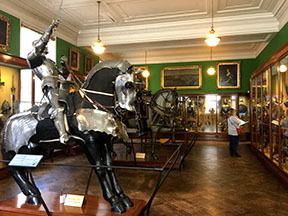
Ted told us that the best armor in London is at The Wallace collection, where I had never been, so Alex and I had a day of art the next day. We started at the Royal Academy to see the Hockney portraits, which I was particularly interested to see again since I had started my own portrait series. I picked up a few things about painting faces, although I also learned that I have no hope in mimicking Hockney’s style which combines unexpected colors in a way I could never hope to do. We dropped by the Abstract Expressionism exhibit too, before walking over to the Wallace Collection to meet Judie. It is housed in a big mansion in Marleybone, once owned by Duke of Hertford (who I think were from the line of Seymours going back centuries and were, in any event rich aristocrats of long-standing). It was an amazing collection of arms and armor (as promised) and each room had several books on reading stands in which you could read more about the individual pieces. Very nice idea. There was also a substantial collection of paintings, including four Rembrandts, “The Laughing Cavalier” by Hals and a number of other impressive works from the 1650-1850 period. It was all accompanied by lots of Louis XIV sort of furniture and decorations and tons of other things that they collected. It is quite a place and you cannot see any of the art or armor anywhere else. When the Duchess of Hertford donated it to the State upon her death in 1897, she stipulated that none of its contents can leave the house.

wallace-coll

I’ll leave the rest to another post. This is getting pretty long….

Myriad Experiences

Judie is off touring America, stopping at various K&L Gates offices, including Boston and Washington, and ending up in Chicago for a conference. When Judie is not around, I have even less order to my life than usual. I tend to eat at odd times and get lost doing projects or watching baseball on my computer. It is actually sort of fun when she is gone for about a week, as she is this time. She returns on Wednesday evening and Alex arrives that morning for an eight-day visit. Alex has finished up with his Every Zip Philadelphia project (which you can see and hear on the WHYY website). It was pretty successful, although I think it was too much management and not enough creativity for him. It wasn’t renewed and he has been hired by Audible to co-produce a multi-part audio series about how Americans experienced World War II at home. He was given a number of books to read and will have access to lots of archive interviews etc. The process of creating his two sections is about to start in earnest, so he is taking this break to visit us.

“There’s no crying in Baseball”: That’s what Tom Hanks’ character memorably said in “A League Their Own”. But it turns out that sometimes there is crying. For some reason, the Mets have been involved in the two most emotionally fraught games in the history of baseball. The first was in 2001, when the Mets played the Braves in the first game played in NYC after 9-11. The atmosphere surrounding the game was incredible and it was punctuated by Mike Piazza’s game-winning home run, the single most dramatic hit I have ever seen and what has to be the highlight of his Hall of Fame career. I thought I would never see another baseball game to compare to that.

Then on Monday night, the Mets visited Miami and the Marlins for the first game after the tragic death of Jose Fernandez, a game that he was actually scheduled to start. Fernandez was incredibly talented, with a simply amazing life story and was supposed to be a wonderful person. There was a very moving opening ceremony, with both teams on the field, which concluded with the Mets players going across the field to hug the Marlins players. Most of the Marlins players were teary-eyed or crying. When they switched to the broadcast booth, Gary Cohen, the main Mets announcer, was so choked up that he could barely talk and Keith Hernandez and Ron Darling were sitting there with conspicuously red eyes. Then, in the bottom the first, Dee Gordon batted right-handed for the first pitch in honor of Fernandez and then switched to his normal side and hit the third pitch for a home run (his first home run of the season and the first time in his career he had hit the ball into the second deck). He was clearly crying as he circled the bases and came back the dugout where he collapsed into the arms of his sobbing teammates. It was just unbelievable on any number of levels. A once in a lifetime baseball moment. Travis d’Arnaud, the Mets catcher, said he was crying watching Gordon round the bases and I doubt he was alone in that. There is crying in baseball after all.

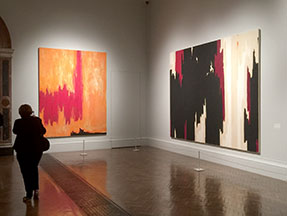
Abstract Expressionism: On Saturday evening, I went to a members’ private tour and party celebrating the opening of the Abstract Expressionism exhibit at the Royal Academy. As our guide/docent pointed out, the name is a bit deceiving, because many of the artists’ styles were neither abstract or impressionistic. It is sometimes called the New York School and NYC certainly became the center of the art world in that period, but many of the artists did not live or paint in NY. Tragedy was one theme as some of the most important artists died young, from suicide (Gorky and Rothko) to car accidents (Pollack). As you might imagine, there were some iconic paintings. There were some great Pollacks, including one huge early one he did on commission for Peggy Guggenheim’s apartment which was a breakthrough moment in that era. And there were great examples from Gorky, Klein, de Kooning (his series of paintings of women were amazing), Rothko (the early works were fascinating), Motherwell and Krasner (a highlight was the first painting she did after Pollack’s death). It was a wonderful exhibit and it was nice to have plenty of time to go back and wander through it after the tour, without being bothered by the usual crowds. For me, the great revelation was Clyfford Still. He became disgusted by the commercialism of the NY art scene and moved to Wyoming, where he painted the rest of his life. He sold practically nothing while he was alive, but now his work is in a museum in Denver, which I have to visit some time. There was a huge gallery of his work, which was breathtaking. See below for an example. There was also a party with a free champagne cocktail and a bar and a jazz singer, so it was all very festive, although I would have had more fun if I’d found someone to go with.

abst-exp

Immigration Detention Seminar: On Monday evening, I went to a meeting at the offices of Amnesty International (which it turns out is about four blocks from our flat) for a conference about the alternatives to Immigration Detention and role of civil society in making those alternatives happen. It was run by an organization called Detention Action. The audience seemed to be mostly immigration insiders–lawyers, advocates, NGO people and a sprinkling of government officials. It was too bad in a way, because some of the speakers were very interesting and for real reform to occur, they are going to need the support of a much wider group. There was a woman who is one of the leading immigration advocates in the Ukraine and, as you might imagine, they have some problems there that are hard to imagine, such as millions of displaced Ukrainians to deal with, in addition to all of the migrants, most of whom are really trying to get to Germany or somewhere. And there was a representative of Freed Voices, a group of former detainees, who spoke very movingly about how de-humanizing detention is and that there is no trust. I was given a big report, which I’m going to read.

Labour Conference: Jeremy : won his election by a landslide and this was followed by a Labour Conference in Liverpool in which the party tried to unify and to explain what they want to do. To me, what was most interesting about the process was the fact that the party out of government actually laid out a fairly detailed program. They take the whole idea of a party platform much more seriously here. It really is a nice political concept, where the opposition party must have a formal “shadow” government which says, with some specifics, what they would do if they were in power. The other nice thing about this system is that the BBC and the media in general (although maybe not the Murdoch press) really give deep coverage these kind of policy matters and engage in a real discussion and questioning about what the party is saying. It is a level of substantive and detailed analysis that is utterly absent in the American media (except on PBS and NPR to some extent). There are a lot of problems with the British system, but they really take politics and the issues much more seriously here, from Question Time to the Shadow Cabinet system to the media coverage.