We got back from France and the World War I battlefields and the very next morning we were on the express train to Edinburgh with Chris and Nancy. It is certainly a nice way to get there. A little over four hours from Kings Cross to the center of Edinburgh, with no need to deal with all of the airport stuff. For some reason the first class coach was only slightly more expensive than coach on the way back, so we got to experience that, although the regular coach was really fine. I find that there is less to say about this trip than some others, partly because so much of the trip was enjoying the stunning vistas and I spent less time thinking about history and architecture.
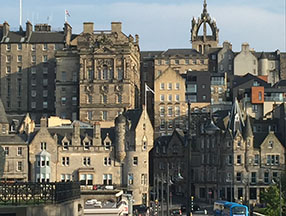
Edinburgh: It really is a lovely city, with most of the buildings a sort of honey-colored sandstone. It has largely escaped being destroyed for centuries (unlike London or even Bath) and much of it is very old and charming. I came to realize as we toured that my knowledge of Scottish history is pretty rudimentary and that the city is, in many ways, a celebration of Scottish history. Now, as it turns out, most of the interesting events in that history occurred before 1600, with endless bloody conflicts with the English (and before them the Vikings and Romans). The Scots were a pretty tough and violent group, much tougher to subjugate than the Welsh or Irish. I wonder if that has something to do with the wild landscape in much of Scotland. The Romans got so sick of dealing with them that they just built Hadrian’s Wall. The English and Scots periodically butchered each other for centuries (often in disgusting ways), but ultimately the Scottish king James I succeeded Elizabeth I and the violent part of their history came to an end. The significant history that followed was mainly literary (Robert Burns, Walter Scott, Robert Louis Stevenson, R. K. Rowling, etc.)
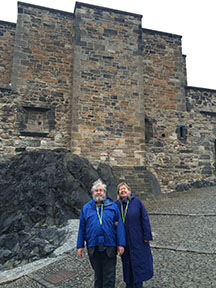
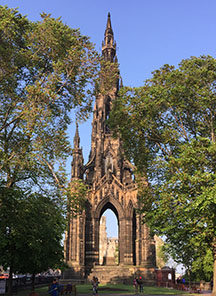
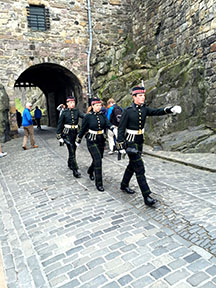
We really only had a about a day and a half in Edinburgh and we were pretty tired from all the travel in France (and Judie had to get some work done), so we really didn’t see as much of the city as we wanted. We did eat at some nice restaurants. There seems to be a serious food scene there and it isn’t all haggis (which I rather like). We did make it up to the castle at the top of the big, volcanic hill at the end of the Royal Mile (the topographic reason why Edinburgh is where it is). It has spectacular views and all kinds of anecdotes about its history (although after three days of Major Tim, I was a bit sick of hearing about battles and slaughter) and guards that periodically change (I’ve seen an awful lot of that over the past several months). While Judie was working, I was able to wander about and go the the National Museum. We are thinking of going back in August for the Fringe festival. Some photos follow:

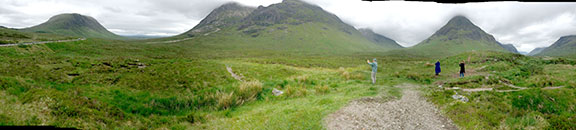
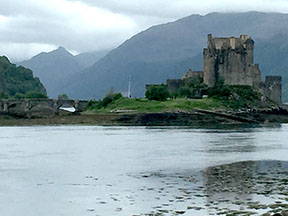
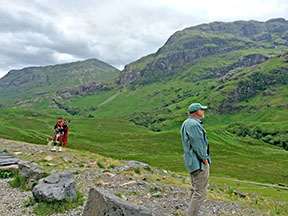
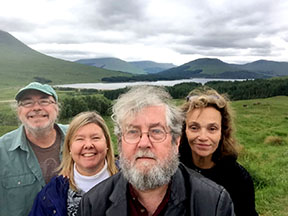
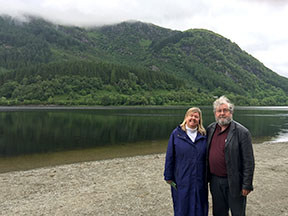
Isle of Skye: I was expecting it to be beautiful, but I really had no idea how spectacular it would be. What was especially surprising was how drop-dead gorgeous the drive was. We rented our car in downtown Edinburgh and drove up through the highlands in western Scotland. Glen Coe is probably the best known of the many lovely areas we went through, but each one was jaw-dropping. Some pictures follow, but they really don’t do justice to the drive:
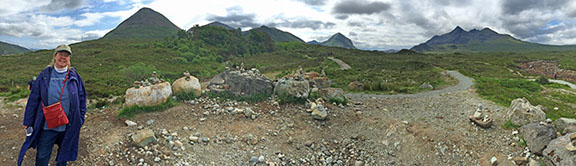
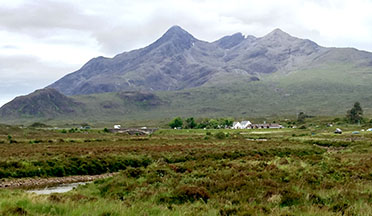
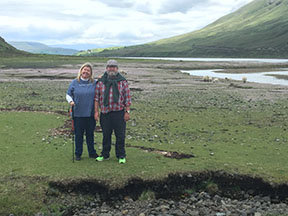
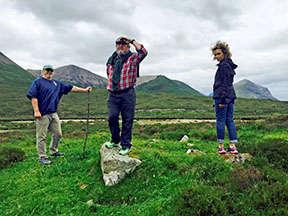
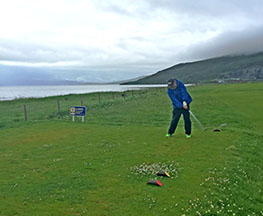
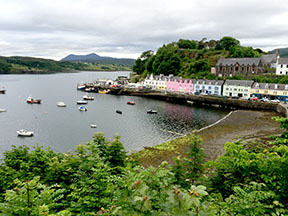
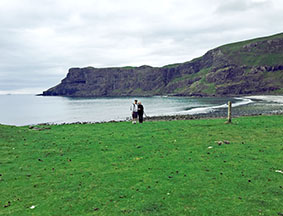
Skye itself was lovely. Out hotel was in the middle of a group of volcanically formed mountains (any peak over 3000 feet is called a “munro” and there are a big number of them in Skye). We took some long hikes, although we didn’t do much climbing. We went once along a lovely long inlet that led out towards the sea from our hotel and which was surrounded by green peaks and once out to Talisker Bay. We went on a tour of the Talisker Distillery and the best thing about it were their self-designed distilling vats, which looked like something out of “Willie Wonka”, bulbous shapes with various pipes going in and out and twisting around, all painted brightly. Rich Lustig and Chris and I played golf on Skye’s small golf course, which was at an impossibly lovely setting. Unfortunately, it began raining just as we started and either poured or drizzled for all nine holes. We persevered, getting utterly soaked. By the time we finished nine, even the Scots were giving up and coming in. We ate lunch at a famous restaurant (absolutely in the middle of nowhere–you had to drive miles on one lane roads to get there) called the Three Chimneys one afternoon and went to the impossibly adorable town of Portree one evening for dinner. Of course, evening is a relative term in Scotland in June, since it doesn’t actually get dark until about 11:00.
We drank a fair amount of scotch whiskey, especially at our hotel’s pub, which had hundred of whiskeys available. I began to get a feeling about the different styles and the terroir that leads to the different flavor profiles. It was a pretty lively place, which had a band and dancing one night as well. (And, weirdly, the young woman who managed the place was from New Jersey.) While sitting and drinking at the bar one evening, we met two older gents from the Midlands, who were on their annual climbing trip to Skye. Each time they try to do the Cuillin traverse, a hike that takes you up and down the spine of that range and over eleven munros. They had quit for the day because the rain (that hit our golf) made it impossible to see more than five feet up there. The had tried that traverse four or five other times and only finished once (taking three or four days, not including going up to stash supplies at various spots). The other times had been stopped by weather that made it too dangerous and once when one of them slipped and was tumbling head over heels toward a cliff when he was saved when he hit a bog. They were entertaining, but, as far I was concerned, crazy. Some Skye pictures follow, but you really had to be there.



Your writing about Scotland and about Major Tim remind me of what I most admired about the European Union — the finally became sick and tired of tearing each other to pieces and resolved to live in peace, or so it seemed. My Linguistics final project was about the Macedonian language in Greece — people were jailed, tortured, refused schooling, etc. for a long, long time if they were heard speaking Macedonian, one of the variations of a Slavic language that is found throughout the area that used to be Yugoslavia. I thought how wonderful — Greece has joined the European Union, and now they will have to keep open borders with Slavic forces such as Bulgaria, which were their sworn enemies for centuries (they are still arguing over which culture Alexander the Great belongs to). They had chosen stability and prosperity over murder. I thought that was a good thing.
But if they now decide that peace and coexistence is not such a great thing, it could devolve into an expression of all the hatreds and divisions of a nationalistic, religious, historical, and cultural nature, that they chose to suppress while trying to make the EU work.
They seem to have tried to force too many cultures into one box, which really just meant suppressing their own cultures and thinking like Germany.
This could end badly.
LikeLike
I have a feeling that this may be the longest period that Western Europe has gone without killing each other since there were so few of them that they had trouble finding each other.
LikeLike