“Hapgood” and a Political Update
I’ll try to get back to finishing up my Holiday Stories soon. I’ve been doing a little painting, although I had to go out and buy new brushes and paint, since everything but the canvases mysteriously disappeared sometime after my painting table in the kitchen was appropriated for a jigsaw puzzle. My sister Norah and her husband Hugo will be arriving on Friday morning, so I’m unlikely to finish anything this week.
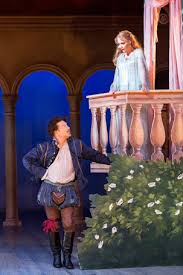
Last night (Wednesday), we went back to the Hampstead Theater, this time to see “Hapgood”, a revival of a Tom Stoppard play from around 1988. It was a spy thriller sort of play, loosely in the Le Carré style, with double and triple agents and all kinds of “spycraft”, centered around a complicated plot aimed at finding the mole in the Secret Service. But, since it is a Stoppard play, it wasn’t just about spying. It was also about quantum physics and science. The way that the science was woven into the plot was incredibly clever. When the physicist/agent is questioned about whether he is a good guy or a traitor, he discusses the duality of science and how you can never tell where an electron is (or where it is going) or whether light is a particle or a wave and that the square root of 16 has two answers, 4 and -4. The problem with the interrogator’s question is a version the Heisenberg principle, that observing a phenomena changes it. The act of interrogation shapes the result. It was all reminiscent of “Arcadia” and could not have been written by anyone else. One of the interesting twists was that the central character, who was running the English spy rings, was a woman, played by Lisa Dillon, who has different sorts of attachments to her various male counterparts. The cast was typically great, with a number of actors who we know we’d seen on some BBC show or other, and the pace and staging were very good. Although the play was first produced a year or more before the collapse of the Soviet Union, its ending was prescient. Hapgood, her ring of spies all blown, decides to give it up and tells her colleague that the game is over and that the KGB and the Secret Service are just keeping each other in business. This wasn’t the greatest of plays, but it was immensely enjoyable and, like all Stoppard work, it made you think. As an added bonus, Jeremy Irons was in the audience. He still looks pretty good.
Brief Political Update: When I was a political science major, one of the things I learned is that the Parliamentary system differs from the American, not just because the executive and legislative branches are combined, but because party unity is central to its operation and that if the majority party cannot remain unified, an election is called. Not any more.
On the Labour side, Corbyn has always been in a weird spot. He has solid support of the rank and file party membership, but the actual Labour MPs often disagree with his positions (and I suspect a good number do not respect him at all). As a back bencher, Corbyn had been a rebel himself, so when he took power, faced with a divided group of MPs on his side, he decided to go with the “big tent” approach. But since the media have decided to portray him as impossibly over his head, this only made him seem weak, especially when he was undercut by Hilary Benn, his own Shadow Foreign Secretary, in the debate on whether to bomb Syria. So when a reshuffle of the shadow cabinet was announced, it was expected that it would be a “revenge reshuffle”, where Corbyn would get rid of those who have disagreed with him on major issues like Syria and the Trident defense system. But when push came to shove, Corbyn only sacked a few minor guys and left the high-profile squeaky wheels like Benn in place. One has to assume that he made an internal political calculation and decided that there would be a huge revolt if he did what it appeared he wanted to do. So, in the end, given the opportunity to look strong and make a major statement, he just ended up looking wimpy, perpetuating the rumors of his eventual demise as leader.
This whole mess took the spotlight off Cameron’s own troubles. His big problem (and the danger facing the UK generally) is the movement to take Britain out of the European Union. The Conservatives have a substantial number of Eurosceptics, who are often outspoken proponents of that withdrawal. (The far right and far left are actually joined on this, although for completely different reasons.) Cameron had to promise a referendum on the issue in the last election and now that the vote seems to be approaching, he is under pressure. He had previously taken the position that the party would take a position on the issue and that he would expect the others to toe the line, but on Tuesday, in the first Question Time after the holidays, he folded. He announced that Conservative members would be free to take whatever position that they wanted and to campaign for either side of the referendum. He supported this with utter blather that it is really “the people’s decision”. This is really the major issue that faces the UK and is one that will have an enormous impact on the future of the country. A “Brexit” is almost certain to have dire economic consequences, at least in the short-term and probably the long-term as well. It could well lead to the exit of Scotland from the UK, with the possibility of Wales following the Scots out the door. EU opponents may now begin campaigning in earnest, helped by the rampant xenophobia resulting from the whole refugee crisis. In the meantime, the EU supporters don’t know what they are campaigning for, since Cameron is going through this charade of negotiating a new and better deal for the UK with the EU. The whole thing is a mess and Cameron just made it worse. But it didn’t get the notice it deserves because Corbyn’s blundering stole much of the spotlight.









 nickinshoreditch