Flowers, Franklin and Politics

Hampton Court Flower Show: When you consider that we have not been especially avid gardeners, it may seem odd that we have been to two flower shows in about five weeks. They just seem like very English things to do. I do think that many British people are very caught up by their gardens, although I wonder if this might be a class thing, since you have to have some money to have a place to have a garden. This flower show one was next to Hampton Court Place but not actually on the grounds of the palace or the extensive palace gardens. (The palace was originally built by Cardinal Wolsey in 1515. He gave it Henry VIII to try to forestall the inevitable when he lost favor in the whole Anne Boleyn controversy. But it only gained him a brief reprieve. Henry and later monarchs did many renovations and expansions, so it is a bit of a hodgepodge of styles. The last monarch the actually use it was George II. We’ll have to go back and visit the palace sometime.)

I think I enjoyed this show more than the Chelsea Flower Show that we attended with Robbie and Bob in late May, mainly because it was less crowded. The area dedicated to this show is much larger and we went on the first day, which I think is limited to Royal Horticultural Society members. It just wasn’t such a mob scene and it was easier to see and get refreshments, etc. And, finally, it was a lovely summer day, with sun and temperatures in the low to mid 70s. Portions of the flower show are aimed at selling you plants and every sort of garden thing you can imagine from tools to outdoor furniture to incredible sheds to garden sculptures of all sizes. Of course, we have no use for any of that in London, although it gave us something to think about for Montclair next year. So the main thing we did was look at all of the various sample gardens. Some were silly and some would be so expensive to recreate that they weren’t much use. But a number were very nice and gave us images of what we might do in Montclair when we return next year.

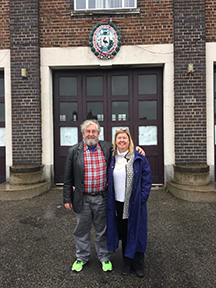
Fourth of July: It is obviously not a holiday at all here (although we did see some fireworks from the terrace of our flat that night for some reason). We decided that we ought to do something to mark the occasion, so we went to Ben Franklin’s house. It is part of an 18th century development of Georgian row houses near to Charring Cross Station and Trafalgar Square. They claim that it is the only standing house where Franklin lived. He lived there from 1757 to 1775, leaving when he was basically deported for treasonous acts against England. (He left his wife in Philadelphia the whole time, as she was afraid of sea travel, and never saw her again.) While he was there, he represented various American interests and was eventually the de facto American ambassador. He also did a variety of scientific experiments and met with thinkers in England and around Europe. He is said to have run up and down the stairs of the house carrying weights, attempting to figure out the relationship of exercise to heart rate. He also designed the lightning rod that was used for St. Paul’s (winning a contest). It remained on the Cathedral until the early 1900s, when it was destroyed by a large lighting strike! While at this house, he also invented the Armonica in 1761. This is an instrument based on the sound you get when you rub the edge of a crystal glass. It had a series of bowls on a spindle attached to a treadle, which turned the bowls. It was easier to play that glasses filled with water and more precisely tuned. It became so popular that composers such as Mozart,Beethoven and Strauss wrote pieces specifically for it. The house had one (refitted with an electric motor) that we could play.

The house itself was a boarding house in Franklin’s day and later became a small hotel after the nearby train station was built. The windows were all blown out in the blitz, but the place was not hit. At points it was derelict and abandoned and home to squatters who removed and sold all the marble fireplaces but one. But other than that and a few Victorian additions from when it was a hotel, the building is essentially unchanged from when Franklin lived there. He lived in one large room on the second floor, overlooking the street. The place has the Franklin stove that would have been in his room, but it is too heavy to put on the old floors. (The house is leaning over a bit as it is.) The other tenant in the building, other than the landlady, was a famous anatomist who ran a small school and dissected bodies. This meant that the house had to be visited by grave robbers in the middle of the night, since that was the only way to get cadavers that the time. It is easy to imagine Franklin seeing the bodies being brought in and going downstairs to watch or participate in the dissections. When the house was bought and renovated for the museum in the 1990s, thousands of bits of bones were dug up from the back garden, representing at least 20 bodies.
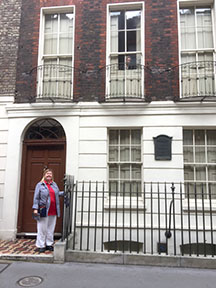
Ben Franklins House 5

British Political Update: The pace has slowed, as it had to. The bombshell-a-day politics after the Brexit vote couldn’t possibly continue. This doesn’t mean that things will turn out well. It is simply going to take time for the inevitable to happen, which I suppose gives one hope that cooler heads will prevail and that somehitng might be worked out over the next two or more years that won’t be as bad as the impact of leaving the EU looks right now. In the meantime, Nigel Farage, the detestable head of the UKIP party, announced his resignation, saying that he had accomplished all that wanted by getting Britain out of the EU. He promised to stay around in his role as a member of the European Parliament (it is hard to imagine anyone worse for that position) to make sure that Britain actually leaves.

The other two parties continue to try find their way. Corbyn is stubbornly hanging on as Labour Party leader, although he has utterly lost the support of the vast majority of Labour MPs. He clearly thinks that he retains the support of the rank and file and would survive a challenge. There is some speculation in the press that his support is weakening among the members and that the unions are fed up with him, but no one really knows. There was one theory that he was waiting for the Chilcott Report on Blair and the Iraq War to come out so that he could denounce Blair in Parliament as a war criminal and then resign. But that turned out to be wishful thinking by those who want him gone. Labour really needs a resolution to all of this since they are just getting increasingly weak and divided. If Corbyn remains in place, the Conservative would have to be tempted to call an election, which could be very bad for Labour’s very future.

On the Conservative side, the party members are going to get to choose between Theresa May and Andrea Leadsom, now that the other Tory MPs have expressed their distaste for Michael Gove, who seems to be viewed as a psychotic Machiavellian figure now. (It is possible that Boris may ultimately come out ahead of Gove in this whole political drama. He retains some support and is still the only really charismatic Tory figure. And he will miss all of the mess surrounding the Brexit negotiations, which will inevitably tarnish the next PM.) As for the near future, Theresa May is clearly competent and experienced. She is somewhere in the Cameron wing of the party, which means that she is a “compassionate conservative” who seems to favor all of the usual conservative economic dogma without being Neanderthal on social issues. She reminds a lot of people of Thatcher, which is a little scary. Andrea Leadsom, on the other hand,  is a bit of an unknown. She was an important figure in the Brexit movement, which is really her main claim to fame in this vote and has gotten her support from the big Eurosceptics. She is much further to the right than May, as far as I can tell. She has been stressing the fact that she is a mother (clearly trying to disparage the childless May) and can therefore be trusted somehow. But she has also come out against marriage equality and rights for pregnant women. It sounds like the majority of the country is hoping that May wins, but it isn’t up to the country. It is up to 130-150,000 Conservative party members, who are old and white and male. It is far from impossible that that group could pick Leadsom.

Of course, this all seems like a Gilbert and Sullivan operetta compared the mayhem taking place in the US. Between Trump, the collapse of the Republican Party, the utter dysfunction of the system of government, the revival of racism and police violence and the worsening gun violence (if that is possible), America is looking pretty horrifying from this distance.

Two Plays, Wales(!!) and more

The best theater experiences for me are when you go to see something with no real expectations that you are going to see something special and find yourself watching a lovely gem, something that you could only see in a theater. This happened to us on consecutive nights this week.

“Flying Lovers of Vitebsk”: I bought these tickets simply because a play about Marc Chagall sounded like ti might be fun. It was staged at the Sam Wanamaker Playhouse, a part of the Globe Theatre complex. (Wanamaker was the force behind the building of the Globe and this Playhouse is a miniature version of the Globe. I like it better.) The play was a magical little gem. It is a small scale production with two actors and two musicians who occasionally pop up in a scene. Marc Antolin, who played Chagall, had an innocence and grace that reminded me of Chaplin, or Keaton or Harold Lloyd. I think this connection was because of his look and the fact that he acted with his whole body, as his performance combined acting, singing and dancing. Audrey Brisson, who played Bella Chagall, was a combination of Helena Bonham Carter and a Cirque de Soleil dancer, with a lovely singing voice. Together, they were great. The play, with combines the prose with singing and dancing was about the loving relationship between Marc and Bella. But it was more than just a love story. It was also about Chagall’s obsession with his painting and career (which had some ups and downs until he left Russia) and Bella’s desire to fill her artistic potential through writing. And it is about anti-semitism, first from the tsar, then from the Bolsheviks. And it was also about the small, market town of Vitebsk. When Marc and Bella were growing up in the early 1900s, there had “sixty synagogues and two churches”. By the end of World War II, it had been utterly destroyed along with Jewish culture. Bella wrote a book about Vitebsk and I’d guess that much of this piece was based on that. It drew you in to these two remarkable characters and the special world in which they tried to live. Memorable.

“Three Penny Opera”: The next night, we went to the National Theatre to see Three Penny Opera. I bought these tickets just because it was the National Theatre doing it, but our one experience seeing the show (with Alan Cummings and Cyndi Lauper as I recall) was so underwhelming that I cannot recall a single thing about it. Not this time. I have been trying to figure out what made this production so wonderful. I think perhaps the main thing is that it had a tremendous new adaptation by Simon Stephens, who is probably best known for “The Curious Incident of the Dog in the Night-Time”. It also boasted a very clever production with an interesting way of moving the flats on the set. The music used the band as part of the play itself at points. The ensemble cast was typically great.  (The big name in the cast is Rory Kinnear, who played Macheath (Mac the Knife) and was compelling.) It is unfair to pick out anyone in the cast since there were no bad performances, but Nick Holder as a truly slimy and bizarre Mr. Peachum and Haydn Gwynne as awful and destructive Mrs. Peachum were especially memorable. The whole production had a dark and very creepy tone and the feeling that something horrible was about to happen. It made a point of its cynicism about society inherent in the play and even related it slightly to the whole mess currently taking place in Britain. The Brecht/Weil duo didn’t write catchy tunes, except “Mac the Knife” of course, but the songs fit into the plot and were rather Sondheim-like in nature. I have an entirely new appreciation for the genius of Brecht and Weil as a result of this evening, which, unlike the prior version I saw, I won’t soon forget.

Wales: As you may or may not know, Wales beat Belgium the other day to reach the semi-finals of the European Cup. This was no minor victory, since Belgium was ranked #2 in the world and Wales had basically  never won any game of consequence since pretty much forever. The fact that they have advanced, while England was humiliated by Iceland has to make it all the more sweet for the Welsh. All of Wales is apparently on cloud nine and all the Welsh are suddenly football fans. And it is not a fluke. They play very well together and have some extremely good players and one great player in Gareth Bale. They have real chance to beat Portugal in the semi-finals. Portugal probably has more talent and features Ronaldo, but they have not played well as a team yet and have only barely made it this far. It would be nice if Wales can keep going, if for no other reason than to distract people from the ongoing mess that the British have created for themselves.

Miscellaneous Thoughts: In no special order:

  • It is tempting to feel sorry for Boris Johnson and his betrayal by Michael Gove, killing his dream to be Prime Minister. But he dragged Britain into a gigantic disaster, largely thinking about his own political career, without having any real idea of what he would do if Brexit won. If you are still in doubt that Boris is a jerk, read this article from the Guardian.
  • The whole Brexit run-up and result seem to have encouraged racist louts and given them a feeling of free rein to engage in contemptible behavior. Racist incidents are up by as much as 500% according to some reports. It is the same phenomena that makes some Trump supporters feel free to engage in misogynist. homophobic and racist activity. This week, racist and xenophobic graffiti appeared on a small building in Newington Green, across the street from New Unity. We tried to figure out what to do and I suggested that we go and paint over it with something about love, but that wasn’t practical, of course. So we ended up creating a banner out of bed sheet with the message “Wherever You Come From, You Are Welcome Here”, which is how Andy starts our services. After the service today, everyone who wanted joined in writing messages on it and in coloring the letters. It was nice response, I thought. See below:
  • You may remember that moment earlier this year when Christie destroyed Rubio in a debate, effectively ending Rubio’s chance of being nominated but also killing his own chances. The same thing appears to have happened to Gove. His betrayal of Boris is looking like a murder/suicide.
  • I tried painting out on the terrace of our flat today. Great light but too much wind. I’ll have to take another shot, but for now, it is back to the kitchen table.
  • It is Sunday, which means that I could actually watch a Mets game. I’m basically limited to Sundays and an occasional Saturday or holiday, since I can’t see staying up until the middle of the night on a regular season game. I do miss Gary, Keith and Ronnie though. It doesn’t feel like summer with out them. Of course, it hasn’t felt much like summer here anyway…. The Metsies have been hanging in there, mainly due to their pitching, without really playing especially well. The should have at least one or two hot streaks in them. If so, they still seem like a playoff team to me. If they keep playing as they have been, they will play meaningful games in September (which is all I ever ask for) and will be close to making the post-season.

Liverpool

On Monday and Tuesday of this week, Judie and I visited Liverpool (she had a conference). I wasn’t expecting much, other than some Beatles stuff. I was expecting to visit a run-down and grubby, kind of depressing old port city. I was pleasantly surprised.

Some Liverpool History: It was formally founded in the early 1200s by King John (of Magna Carta fame) to give him a port for his invasion of Ireland. As our Beatles guide pointed out, this ultimately backfired, as the Irish ended up invading Liverpool as the result of famines, etc. There are more Irish in Liverpool than any city other than Dublin.

The key moment in Liverpool history was when they figured out that, by installing locks in their docks, they could keep the water level high, despite the huge tidal changes in the harbor, making the harbor much more efficient. They eventually built miles and miles of docks, all connected by an elevated railway. It was some impressive engineering. The other thing that helped Liverpool is that it was the closest English port to the New World as well as the new manufacturing and production centers of the nascent Industrial Revolution. This combination led to Liverpool becoming the center of the slave trade from the 1700s until it was finally outlawed in the early 1800s. The boats would be loaded in Liverpool with goods to trade in Africa for slaves, who were transported to various parts of the New World and traded for things like sugar and cotton, which were brought back to Liverpool and sold. The cotton would be sent out to nearby mills and the cloth then sold. Liverpool became an enormous trading center and very rich.

The rich people in Liverpool did what rich people do. They built huge ostentatious buildings. As a result, Liverpool has an amazing collection of 18th and 19th century architecture. And this is just what survived the German bombing in World War II. As an important port and industrial center, Liverpool was a target and suffered extensive damage. But what really destroyed Liverpool was the advent of container ships. They made the old dock system obsolete and eliminated the need for longshoremen and everyone else connected with unloading ships and storing the cargo. (The identical thing happened in New York City.) The unions fought this, but it was a losing battle and Liverpool suffered greatly. It has made a relative comeback. The downtown area is fixed up with museums along the water and the few remaining docks renovated to be tourist destinations with cafes and shops. There are nice restaurants and new hotels. And there is all of that great old architecture. It makes for a nice city to visit, although I wonder if the underlying economy is going that well. I’d guess that globalization has passed a lot of its residents by. The communities surrounding Liverpool all voted to leave the EU.

While I was there, I went to the Tate Museum’s Liverpool Annex and saw a good exhibit of the work of Francis Bacon and Maria Lassnig. There was a Museum of Slavery, which I guess is an effort to atone for the past and was nicely done. And I went to the Maritime Museum, which had big exhibits about the Titanic and the Lusitania. (The Titanic was actually built in Northern Ireland and never docked inLiverpool. But since it was owned and operated by the White Star Line, which like Cunard and other ship lines was headquartered in Liverpool, it went down with Liverpool painted under its name.)

Beatles: The big interest for us in going to Liverpool was to do the Beatles tour. It is really a kind of industry there, with a museum at the Albert Dock, countless shops selling Beatles stuff and various tours available. I’d guess that this is an industry with a shelf life, as I wonder if future generations will have the interest that the baby boomers do. We went to the Beatles Story museum on Albert Dock, which was not as schlocky as I feared it might be. It was mostly recreations of places in Beatles history and lore, but it had lots of information and pictures and a decent audio guide. But the most enjoyable thing we did was a Taxi Beatles Tour with Gareth and his Taxi, Michelle.

We learned a few things about the Beatles that we didn’t know.

  • Although The Cavern Club is more famous (but is actually a recreation) since the Beatles played there close to 300 times and were “discovered” by Brian Epstein there, the more significant club is the Casbah Coffee Club. This was in the basement of Pete Best’s house and the walls were painted by John, Paul and George. It is where they first performed. It is still owned by the Best family and can be visited. The original painting is still there.
  • Mona Best, Pete’s mom, was the band’s manager until Pete was fired as drummer and replaced by Ringo. The firing of Pete was very unpopular in Liverpool, where he was a local favorite. At the first post-Pete gig, there were protests in the street and George showed up with a black eye when a fan punched him in the face.
  • The lads didn’t really want a drummer at all, but had to have one to play in Germany, so they hired Pete.
  • The school that Paul and George went to was closed. Paul led a campaign to reopen it and appears there for graduations and to give a master class. The school is now called the Liverpool School of Performing Arts.
  • Strawberry Fields was an orphanage that John used to hang out at as an unhappy teen. (His father deserted him and his mother was forced to give him up to a domineering aunt.) It burned down at one point and John paid to have it rebuilt. But it has since closed and is completely overgrown. All you can see is the gate.

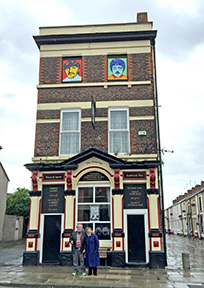
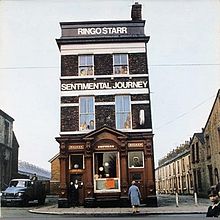
Some Pictures: On the Taxi Tour, we went to homes of all four Beatles. John and Paul’s are owned by the National Trust. Pictured below is the pub where Ringo’s mother would have gone. Their house is down the street to the right. It is on the cover of Ringo’s album “Sentimental Journey”.

Ringo Pub   Sentimentaljourney

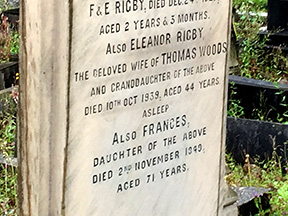
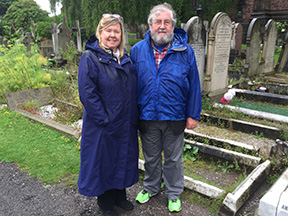
We went to see the grave of Eleanor Rigby. There is also a grave of someone named MacKenzie, but Gareth assured us that it could not be “Father MacKenzie”. It is in a church yard that John, Paul and George would have known and loitered in.

Rigby 1   Rigby 2

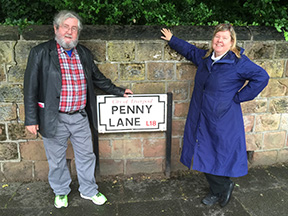
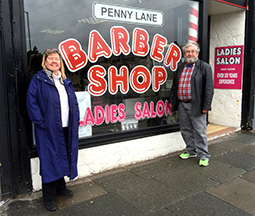
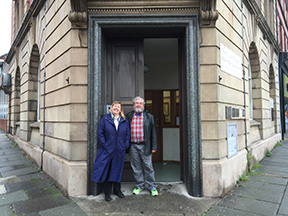
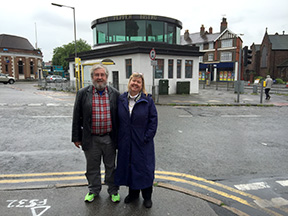
These pictures are from our stop at Penny Lane, both the Lane itself and the shopping district known as Penny Lane where they would have hung out. The pictures are of Penny Lane, the shop of “the barber showing photographs of every head he’s had the pleasure to know”, the corner bank with “the banker with the motorcar”, “the shelter in the middle of the roundabout” (where the bus that Paul and George took to school would have stopped) and the station of “the fireman with the hourglass” (which closed last year). Very strange….

Penny Lane   Penny Lane Barber   Penny Lane Bank   Penny Lane Roundabout   Penny Lane Firehouse


More British Politics

I seem to be living through very strange times here. The Brexit referendum vote seems to have unleashed all sorts of crazy things. The latest is the shocking announcement by Boris Johnson that he would not be seeking to become Prime Minister. On the other hand, when I was watching the England vs Iceland footy game, the English fans told me that they could never be confident, even against a little country like Iceland, because England has a history of losing such games. Similarly, history has taught that the frontrunners for the Conservative leadership never win. So maybe the Boris thing should not be a surprise.

“Et tu Michael? Then die Boris!”: Michael Gove used to be known as Cameron’s Brain. He is smart guy and was the equivalent of Cameron’s Attorney General and one of the leaders of the Leave campaign. Until today, it was assumed that he would become Boris’ Brain, as he had announced his support for Boris and was seen as his campaign manager. Then yesterday, an e-mail from his wife (a Daily Mirror correspondent) was leaked by Sky News (all owned by Murdoch). She advised him to get solid commitments from Boris before supporting him and said that Boris had no credibility with Murdoch or anyone else without Gove. Then, first thing this morning, Gove announced that he was withdrawing his support for Boris and was going to run himself (thereby stabbing Boris in the back before Boris could do it to him?), saying that Boris “was not up to the challenge”. Pretty cold, huh? Boris counted votes and concluded that he was dead and announced that he would no longer run. The weird thing was that Boris gave what sounded like his speech announcing his candidacy, only changing the punchline at the very end.

So Now What for the Conservatives?: There are five candidates. Two must be chosen by the other Conservative MPs and the two in the lead are probably Theresa May (who was a lukewarm Remain supporter) and Michael Gove. Especially compared to Boris, these two are so lacking in charisma that they make Cameron (who had all the charisma of a ham sandwich) look like Michael Jackson. But who knows what will happen next.We do know that eventually two candidates will be chosen and there will be a vote among the Conservative members, who are mostly old, mostly male and who total only 130-150,000. It is absurd that the next Prime Minister would be selected by such a group, so one would think that a snap election has to happen sometime this year or early next year. But, again, the way things are going, it is hard to make any sort of prediction.

Meantime, in the Labour Party: Jeremy Corbyn seems to believe that he has the support of the rank and file of the party, a large number of whom his supporters signed up last year. He may be right, although he has been so ineffective (if well-meaning) that one wonders if even the true believers on the left are losing faith. Corbyn does not seem to be inclined to leave, even though he has pathetically little support from his Parliamentary colleagues and he can barely form a Shadow Cabinet. He and his supporters take the position that the recent vote of no confidence was illegal, although it was so overwhelming that it is hard to ignore. Since Corbyn won’t take the hint, someone is going to have to challenge him formally. If it gets down to a vote, there will probably be a big influx of new voters, adding to the roughly 400,000 members currently on the books. If Corbyn does not resign, there is a very real chance that the Labour Party will split in two and other parties will pick up the pieces. It is really hard to see how this all doesn’t end up as a disaster for Labor in the next election.

In Question Time yesterday, Cameron said something like “I know that it is in my Party’s interest that you remain as leader, but, my God man, it’s time for you to go”. I doubt that Corbyn will take such advice from someone he hates.

Quite a mess!

Miscellaneous Stuff

The Land of Perpetual Clouds:  I know it is incredibly boring to write about the weather, but I do have to say that the absence of any real seasons, which isn’t so bad in the winter, is kind of depressing in what purports to be summer. It is hard to think of a day in which the temperatures have passed 70℉ and clouds and occasional rain dominate. Bill Bryson, upon moving back to the UK, was asked what he would miss about America and he answered “Weather”. Now I get it.

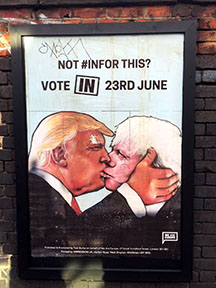
My Favorite Poster from the Brexit Campaign: This one was around the corner from our flat. I never saw it in any other places, although I understand it was not a one-off. Perhaps if there had been more, there would have been a different result. (Just kidding.)

Brexit Poster

Brexit Reactions: If you care about this issue, you can read about it endlessly in the NY Times (or the Guardian’s web site). There are a few things that are striking:

  • There was a palpable feeling of shock, anger and grief in London on Friday and continuing through the weekend. The service at New Unity on Sunday had a funereal feel to it. The young members of the congregation were particularly upset.
  • The results have also led to all kinds of ugly, racist incidents. One has to assume that the tone of the campaign and the gloating by the utterly repellant Nigel Farrage  (head of the far right UKIP Party) has energized and validated the lunatic fringe, who now seem to feel that it open season on Poles and anyone of color.
  • As you may have heard, there is no one in charge of the government any more. Cameron has essentially resigned and is in caretaker mode until the Tories can pick a new Prime Minister. And that looks like it will be very divisive.
  • At the same time, the Labour Party is imploding, as Corbyn has just lost a no confidence vote among the Parliamentary MPs by a spectacularly lopsided 172-40 vote. He probably has sufficient support with the rank and file members that he can and will fight this, further weakening Labour regardless of who wins. I can’t see any good way out of this mess for the Labour Party. The left wing of the party, vaguely led by Corbyn, is ready for a fight against the centrists in Parliament, who they think have sold out Labour’s principles. You should read the Facebook posts I’ve been getting from left-wing friends in the New Unity congregation. It would be nice if there were some alternative leader who inspired confidence, but no one on the left will challenge Corbyn and too many of the other candidates are either nobodies or MPs tainted by being Blairites. (There may even be a fight about whether Corbyn can even run, which will cause further bloodletting.) There is likely to be an election called in the next six to twelve months and it is not impossible to imagine the Labour Party being crushed so badly that its future existence is in doubt, which is weird since the Conservative Party is also in utter turmoil and is extremely unpopular.
  • The fact that the Leave side, led by Johnson and Gove, have been exposed as having no real plan about what to do if they actually won just makes matters worse for the Conservatives. There seems to be a real disgust with Boris Johnson as the fact that he is backtracking on pretty much every argument he made in favor of Brexit just confirms that he was acting as the worst sort of political opportunist. There is an Anyone But Boris faction in the Tories, but if he becomes one of the two candidates for leadership (probably against Theresa May), you would have to bet on him winning. Of course, whoever wins faces an impossible task and then another election.
  • It is just such an awful mess, with no grown ups in charge and no likelihood that Britain can extricate itself from the hurricane that the referendum has unleashed. It may all be going in slow motion, but is like a lava flow. It keeps moving day by day and cannot be stopped.

New Unity Service: On Sunday, I helped organize the service at the New Unity congregation. I had originally wanted to do a sort of art communion combining a celebration of the summer solstice with the end of a quarter in which the services were about healing and recovery. I went through the prior services and took out excerpts to create a 1015 minute reading that reviewed twelve services. The plan was to give each person a piece of colored paper (summer colors) on which they would be asked to write or draw something about the past quarter and the them of healing and recovery. We would then all bring our paper to front and create a collage on big piece of foam board. (The Art and Soul covenant group did something similar in Montclair, but didn’t include the writing by the congregants.) Then the Brexit vote happened and Andy and I agreed that this shock had to be acknowledged. Fortunately, the healing and recovery theme fit in all too well for the Brexit disaster and the service went quite well. I forgot to take a picture of the group collage, but I’ll do it eventually and send it out.

England Loses to Iceland: On Monday night, England played Iceland in the quarterfinals of the European Cup and were outplayed by a country  the size of a London suburb and lost 2-1. The British consider themselves to be a serious power in soccer (football here) and this loss came as a huge shock. But it probably shouldn’t have been. England has only won a handful of important international games over the last thirty or more years and has been repeatedly humiliated or at least knocked out of World Cups and similar competitions at early stages. They do have the richest Football League, but that doesn’t mean that the British players are the world’s best. They seemed to completely lose their composure when they fell behind Iceland, who were far more disciplined. Perhaps their history of failure was weighing on them. Of course, it seemed to me that England could not win a European Cup match just days after voting to leave Europe. Maybe this one can be blamed on bad national karma. In any event, losing to Iceland was another disorienting blow here.

A New Painting, “Wild” etc.

I’ve been struggling with two paintings that have been in progress for seemingly months. Of course, that is partly because I’ve been traveling a lot and having lots of company and then I fell behind on writing for the same reasons. Over the past week or so I’ve caught up a bit on the writing part, although I have to say that the travelogue sort of posts are a different kind of prose. They are more focused and require me to spend time with the multimedia elements. In a lot of ways, I think I like the ones that are more random.

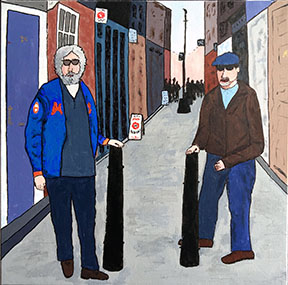
The painting that has been sitting around the flat the longest is one that started out as a photo of me and Jerry Fried standing in front of nearby scenic alleyway. I got the two figures done fairly quickly, although I’ve been fiddling away with them ever since and then had to come up with a background that looked a little like the alleyway without being so busy that it distracted from the main subject. I eventually finished a background, but there wasn’t enough going on, so I added some wall signs and sandwich board, which helped some. But it still wasn’t right. Here is where I was on it:

Jerry Nick 1

You may recall that I was complaining a couple of blog posts back that this painting wasn’t either realistic or impressionistic and was really more cartoonish than anything else. I decided to go with that idea and bought permanent ink black pens and drew on top of the painting. The result is below. I think it is an improvement. I’m still thinking about adding a figure in the middle distance, but I’m going to leave it for now.

Jerry Nick2

“Wild”: On Brexit Referendum Night, we were off to see “Wild” at Hampstead Theatre with Kathy and Jim. It is new play by Mike Bartlett that is inspired by (but not exactly about) the Snowden leak of documents. It opens with a Snowden-like figure sitting in a Russian hotel room a few days after the leak, his life utterly turned upside down. He is visited by a woman (played by a mesmerizing Caoilfhionn Dunne–and that’s not a typo) who seems to be a representative from a group that will help him. But is she? Does he want to be their spokesman? Who can he trust? She leaves and a man visits, saying he is the representative and she isn’t. Who is lying? Maybe both of them? Should Andrew (the Snowden guy) be worried for his safety? They seem to know everything about him. Does he have any privacy? Does anyone? The play goes on like this and sometimes got a bit talky and was not always completely coherent. At one point, the woman actually stabs her hand to prove herself to Andrew (which didn’t really make sense) and to get him to join them (whoever they are), but when she returns later with the man, there is no scar. It was all a fake. And then it turns out that not just the phone in the hotel room is a fake, the whole hotel room is a fake. This leads to an incredible bit of stagecraft as the man and woman spectacularly dismantle the room, which disappears piece by piece before out eyes, leaving a black room. The completely shaken Andrew then has to deal with his world literally turning over as the stage begins to rise up at one end and then keeps going and the entire box set turns on its side, leaving Andrew sitting on a chair (somehow) facing down at the man and the woman. The man leaves and the woman is trying to get him to come down and join their organization. She then pulls out a large pin and point it at herself. There is bright flash and explosion and she disappears, leaving pieces of paper fluttering to the ground as the play ends. Frankly, this whole ending was so amazing and such a mind-boggling scene of spectacular stagecraft that it almost didn’t matter that the play itself was slightly incoherent. It was really quite fun overall and Ms. Dunne, who had the best part and pulled it off very well, led a very good cast.

Scottish Power: No this isn’t about Scottish politics. It is just a story. When we first moved here, I discovered that we got our utilities from Scottish Power for some reason. I dutifully called to change the account our names and could barely understand the very nice Scottish lass with a thick brogue on the phone. A month later, I got a bill in the prior tenant’s name, so I called again. By this time I was better at understanding the local dialects and managed to get the account changed. A few months later, I got another bill and noticed that I was only being billed for electricity. So called and asked if I had a gas account. I was told that there seemed to be some problem and that they would look into and get back in touch with me. I not only never heard from the them again, they stopped sending me any bills. I finally got a letter last week telling me that I had to sign up for an account. I called back and gave them the number of my electric account and was told that they would call me back in an hour. They never called. So I called the next day and finally got someone who was able to navigate their billing system. He told me that I already had both accounts and that I had been switched to  digital billing (but it turned out that they had misspelled my e-mail address, so they never told me.) He advised me that there was some reason why my gas account, while set up, could not be activated. He said that they would work on it. (I doubt I will ever get billed.) A few days later, I finally got an e-mail asking me to pay my outstanding electric bill. I did and got an e-mail thanking me for the payment, but it was addressed to the prior tenant. I asked them to correct it, but it seems to be losing effort.


Britain Decides to Step Off a Cliff

I have to admit that, deep down, I never thought this was going to happen. And I wasn’t alone. The bookies were giving odds on Remain (and they made a fortune apparently, as betting was reportedly heavy) and the markets were assuming that the status quo would win out. Late polls seemed to indicate that the Remain side was going to pull it out. So when we went to bed last night with the ballots being counted, it seemed like a close vote with the Remain side eking out a win was most likely. There was no exit polling and the media was so burned in the last election (which they and the polls got completely wrong), so there were no projections and the paper ballots are counted by hand. As a result we went to be knowing only that Gibraltar had voted overwhelmingly to stick with the EU (no surprise), but with the actual result up in the air and no result expected until early the next morning. We woke to the clock radio telling us that the Leave side had prevailed and that Cameron had announced his resignation. It is all pretty shocking. Here are some thoughts:

  • It was always pretty clear that Cameron would not survive a loss on the referendum. It was surprising that he resigned so quickly. Even the Leave side wanted him to stay in place (at least in the short term), anticipating the exact turmoil that is taking place. But I don’t blame him.
  • The scathing response of Nicolas Sturgeon, the leader of Scotland, makes it absolutely clear that there will be another vote to leave the UK. She says that Scotland is being taken out of the EU against its will. So you can say goodbye to the “United” Kingdom.
  • This all will happen over time. The UK is still in the EU. Under Article 50 of the EU Agreement, the British government has to give notice to the EU that they are leaving, which would start the clock running and Britain would be out in two years. The actual notice probably won’t happen until a new PM is chosen by the Tories. Thus, the whole thing will unfold over time. The divorce negotiations will be very rocky.
  • It is hard to believe that a recession in Britain is not inevitable. The only real question is how bad and how long.
  • This all probably helps Judie’s law practice in the short run. Companies are going to need lawyers to figure out how the navigate this changing landscape. I imagine that the financial sector of London is just freaking out right now.
  • It is possible that the big winner in this is going to be Ireland! Many companies are going to be looking to move some or all of their operations from London to an EU country and Ireland is the most obvious destination.
  • Exactly what happens in Northern Ireland, which voted to Remain, is unclear. Are firm borders between Northern Ireland and Ireland inevitable? This would change the politics in both countries.
  • Boris Johnson and Michael Gove tried to sound statesmanlike and reassuring. It seems most likely that either one of them or Theresa May will end up being the next Prime Minister. Boris was booed by crowds around his house this morning, but that doesn’t mean much. It seems to me that he has to be the front-runner.
  • Jeremy Corbyn, the leader of the Labour Party, comes out badly in all of this (as always). The Remain side needed vigorous support from Labour voters, which did not materialize. While this is probably because the traditional Labour coalition is breaking up, it is also true that Corbyn has never been a supporter of the EU and was a lukewarm supporter of the Remain side. You are hearing some people blaming him for this loss, which isn’t fair but is just another issue for the anti-Corbyn parts of the Labour Party. This may be the triggering event that leads to a challenge to Corbyn.
  • It will be fascinating to see what happens to the EU. Reform? Collapse? Beginning of the end of the Euro?
  • There was an element of anti-intellectualism, anti-immigration, anti-elite impetus behind all of this. The young, the college educated, the cities such as London all supported Remain by large margins. The Leave side won with support from the poorer countryside, older, white voters and the less well educated. It resembles the Trump coalition in a way.

Turmoil doesn’t really do this whole mess justice.


The Globe and Brexit Vote Near

The Globe Theatre and “Taming of the Shrew”: Last night, we went to the Globe Theatre with Kathy and Jim and saw “Taming of the Shrew”. We had never been to the Globe before. It attempts to be a re-creation of the original theatre, although no one really know what that building looked like. It has three levels of benches (they will rent you cushions) surrounding a standing area which contains the stage. (In Elizabethan times, the poor would stand and the upper classes and nobility would sit on the stalls.) There is no roof over the standing area and a only part of the stage is covered, so you can get quite wet going to a play there. I took a picture before the play started, which you can see below. It gives you a good idea of the theatre layout. Unfortunately, it also illustrates that our view was slightly blocks by the pillar holding up the roof over the stage.

Globe Theatre

The production itself was OK. One of the things they appear to like to do at the Globe is intersperse music in the plays, which I am willing to guess is what they did originally. So there is a small band playing on a level above and behind the stage. This production was pretty broadly played most of the time. There were lots of sight gags and the actors would occasionally break the “fourth wall” and involve the audience, especially those standing along the front of the stage. Between that and the music, it gave the whole thing a feel of what Elizabethan theatre might have been like. I liked that part. Because of where we were sitting  and the fact that the actors are not miked, I missed some of the lines, but I know the play pretty well and really heard all of the important bits. It was enjoyable.

However, I had two complaints about the way it was directed. First, while much of the play was acted broadly and aiming for laughs, the scenes between Petruchio and Kate seemed to go beyond the simple misogyny of the play into a kind of brutality. It was more like Gitmo interrogation than Petruchio taming his shrewish wife. I just couldn’t get any underlying affection, so when Kate finally agrees that the moon is the sun, etc., it is more like she is a broken POW or a hostage suffering from the Stockholm syndrome than a woman having a human relationship. I know that the play is misogynistic and sexist, but this interpretation was really quite creepy.

The other thing that bothered me about the production was the director’s effort to tie “Taming of the Shrew” to the Easter Rebellion in Ireland (it is the hundredth anniversary) and the Irish’s abject failure to produce the promised reforms sought by the many women who fought in that Rebellion. It meant that the acts opened and ended with angry Irish ballads and the actors all had thick Irish brogues (making it all slightly harder to understand) and wore modernish Irish clothes, which was fine I suppose, although you wouldn’t have known that it had anything to do with the Easter Rebellion without reading the programme. I’m guessing that this Easter Rebellion reference influenced the way the Petruchio and Kate scenes were played. I guess the idea was to make the point that women were treated as property and that Petruchio treated Kate as he would a wild horse to be tamed. Its pretty simplistic and it robs the play of any real interpersonal relationship between the two of them, making the end of the play unsatisfying and vaguely depressing. I suppose portraying Petruchio as an awful, hyper-sexist, sadistic jerk might have worked if the rest of the play had been darker and the other men had at least a vaguely similar outlook. But since the rest of the cast was playing it for humor and a more normal interpretation, Petruchio comes off as as psychopath. Oddly, I think this may have been the director’s intent.

The acting was good, of course, and you can’t blame them for the unsettling interpretation of the central relationship. I understand that it is tempting to add a twist to the interpretation of Shakespeare since the plays have been done so often. But sometimes, the director gets in the way of the play itself.

The Vote Approaches: Speaking of unsatisfying and depressing, the campaign leading to vote on the Brexit referendum is winding down and vote will be on Thursday. The two sides took some time off last week after the truly tragic murder of MP Jo Cox, a woman who had spent her entire life trying to help the poor and oppressed, first as an OXFAM worker and later as a charismatic MP. It seems pretty clear to me that ugly, coded racist, and anti-immigrant rhetoric of some of the particularly strident and awful Leave proponents (a minority I grant you), encouraged the far right killer to feel that his act was justified, although few are willing to come out and say it. It probably won’t impact the final outcome, although one might argue that it broke the seeming momentum that the Leave side seemed to have ten days ago and could disgust enough people to make a difference it what will likely be a close vote. It is really a question of turnout. In particular, if young voters, who are said to overwhelmingly support Remain, show up at the polls, that side would easily. But they won’t, so it up in the air. It will be interesting to see the reaction of the losing side.

Travel Tales: Scotland

We got back from France and the World War I battlefields and the very next morning we were on the express train to Edinburgh with Chris and Nancy. It is certainly a nice way to get there. A little over four hours from Kings Cross to the center of Edinburgh, with no need to deal with all of the airport stuff. For some reason the first class coach was only slightly more expensive than coach on the way back, so we got to experience that, although the regular coach was really fine. I find that there is less to say about this trip than some others, partly because so much of the trip was enjoying the stunning vistas and I spent less time thinking about history and architecture.

Edinburgh: It really is a lovely city, with most of the buildings a sort of honey-colored sandstone. It has largely escaped being destroyed for centuries (unlike London or even Bath) and much of it is very old and charming. I came to realize as we toured that my knowledge of Scottish history is pretty rudimentary and that the city is, in many ways, a celebration of Scottish history. Now, as it turns out, most of the interesting events in that history occurred before 1600, with endless bloody conflicts with the English (and before them the Vikings and Romans). The Scots were a pretty tough and violent group, much tougher to subjugate than the Welsh or Irish. I wonder if that has something to do with the wild landscape in much of Scotland. The Romans got so sick of dealing with them that they just built Hadrian’s Wall. The English and Scots periodically butchered each other for centuries (often in disgusting ways), but ultimately the Scottish king James I succeeded Elizabeth I and the violent part of their history came to an end. The significant history that followed was mainly literary (Robert Burns, Walter Scott, Robert Louis Stevenson, R. K. Rowling, etc.)

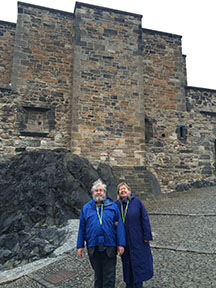
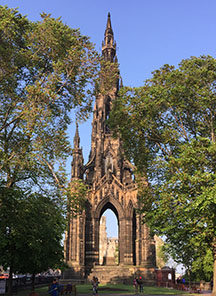
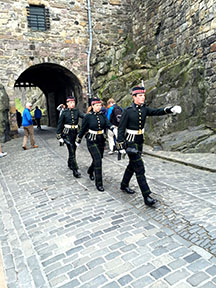
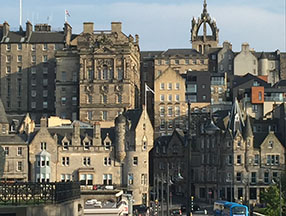
We really only had a about a day and a half in Edinburgh and we were pretty tired from all the travel in France (and Judie had to get some work done), so we really didn’t see as much of the city as we wanted. We did eat at some nice restaurants. There seems to be a serious food scene there and it isn’t all haggis (which I rather like). We did make it up to the castle at the top of the big, volcanic hill at the end of the Royal Mile (the topographic reason why Edinburgh is where it is). It has spectacular views and all kinds of anecdotes about its history (although after three days of Major Tim, I was a bit sick of hearing about battles and slaughter) and guards that periodically change (I’ve seen an awful lot of that over the past several months).  While Judie was working, I was able to wander about and go the the National Museum. We are thinking of going back in August for the Fringe festival. Some photos follow:

Edinburgh 1  Edinburgh 2   Edinburgh 3  Edinburgh 4   Edinburgh 5

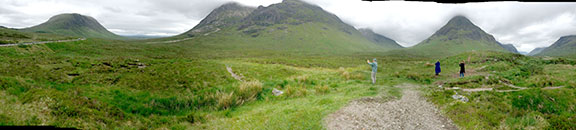
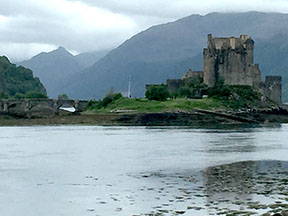
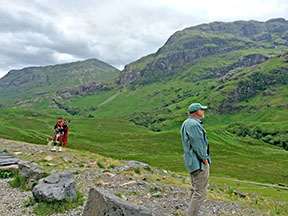
Isle of Skye: I was expecting it to be beautiful, but I really had no idea how spectacular it would be. What was especially surprising was how drop-dead gorgeous the drive was. We rented our car in downtown Edinburgh and drove up through the highlands in western Scotland. Glen Coe is probably the best known of the many lovely areas we went through, but each one was jaw-dropping. Some pictures follow, but they really don’t do justice to the drive:

Skye road 1    Skye road 2   Skye road 3   Skye road 4   skye road 5

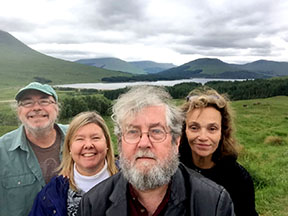
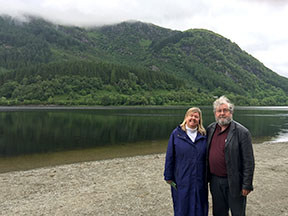
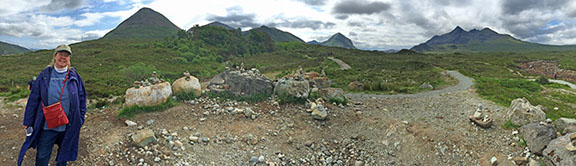
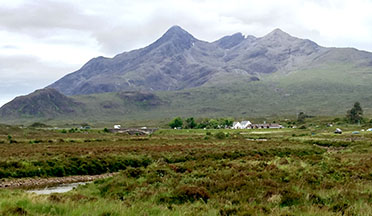
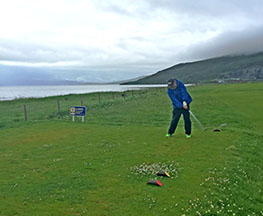
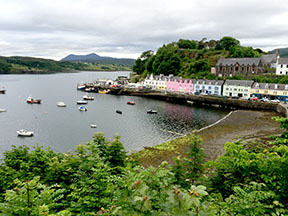
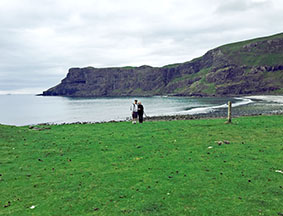
Skye itself was lovely. Out hotel was in the middle of a group of volcanically formed mountains (any peak over 3000 feet is called a “munro” and there are a big number of them in Skye). We took some long hikes, although we didn’t do much climbing. We went once along a lovely long inlet that led out towards the sea from our hotel and which was surrounded by green peaks and once out to Talisker Bay. We went on a tour of the Talisker Distillery and the best thing about it were their self-designed distilling vats, which looked like something out of “Willie Wonka”, bulbous shapes with various pipes going in and out and twisting around, all painted brightly. Rich Lustig and Chris and I played golf on Skye’s small golf course, which was at an impossibly lovely setting. Unfortunately, it began raining just as we started and either poured or drizzled for all nine holes. We persevered, getting utterly soaked. By the time we finished nine, even the Scots were giving up and coming in. We ate lunch at a famous restaurant (absolutely in the middle of nowhere–you had to drive miles on one lane roads to get there) called the Three Chimneys one afternoon and went to the impossibly adorable town of Portree one evening for dinner. Of course, evening is a relative term in Scotland in June, since it doesn’t actually get dark until about 11:00.

We drank a fair amount of scotch whiskey, especially at our hotel’s pub, which had hundred of whiskeys available. I began to get a feeling about the different styles and the terroir that leads to the different flavor profiles. It was a pretty lively place, which had a band and dancing one night as well. (And, weirdly, the young woman who managed the place was from New Jersey.) While sitting and drinking at the bar one evening, we met two older gents from the Midlands, who were on their annual climbing trip to Skye. Each time they try to do the Cuillin traverse, a hike that takes you up and down the spine of that range and over eleven munros. They had quit for the day because the rain (that hit our golf) made it impossible to see more than five feet up there. The had tried that traverse four or five other times and only finished once (taking three or four days, not including going up to stash supplies at various spots). The other times had been stopped by weather that made it too dangerous and once when one of them slipped and was tumbling head over heels toward a cliff when he was saved when he hit a bog. They were entertaining, but, as far I was concerned, crazy. Some Skye pictures follow, but you really had to be there.

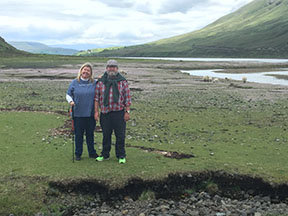
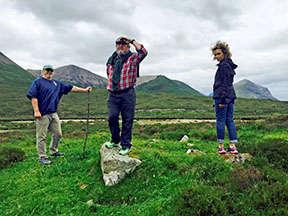
Skye 1  Skye 2   Skye 3  Skye 4   Skye 5  Skye 6  Skye 8   Skye 7

Royal Ascot, National Theatre and Other London Thoughts

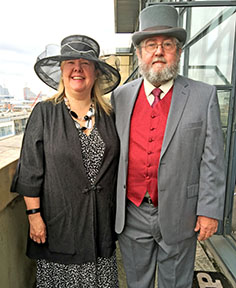
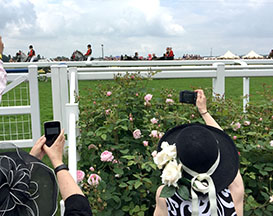
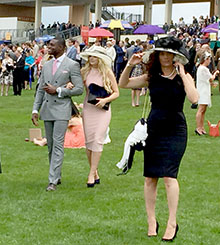
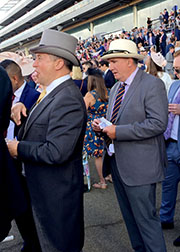
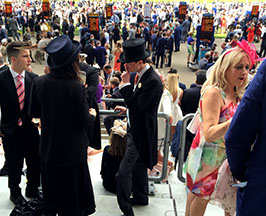
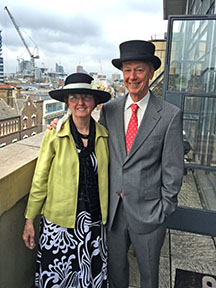
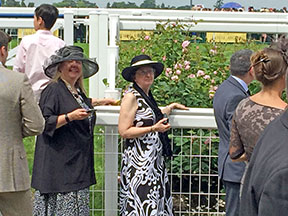
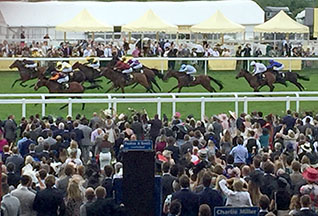
Royal Ascot: On Friday, we went to Royal Ascot with Judie’s sister Kathy and her husband Jim. It is an expensive day out for what is basically just a day of horse racing. There are two things that makes it special. First, the Queen comes to all five days of Royal Ascot and each  of the days open with her being brought down the track in a carriage to the Royal Pavilion. (See the picture below of her passing by while Judie and Kathy are taking pictures.) And second, everyone who goes gets incredibly dressed up, so the real entertainment is looking at the other people there. Photos of us follow:

Ascot 1   Ascot 2   Ascot 3  Ascot 4

A few more notes about the experience. To get there, you need to either drive or take the train from Waterloo (about and hour, as it it past Heathrow.) I felt a bit silly on the Tube wearing my fancy duds and top hat, but when we popped up into Waterloo, there were lots of people similarly overdressed all streaming toward a platform. We barely got seats on the train, which was a good thing because at each of the six or seven stops along the route more and more people got on, until the cars were more crowed than rush hour Underground coaches (excepts that all of the sardines were very well dressed). When we finally got there, it took nearly 10 minutes just to get off the platform. For £78 a person, we had the privilege of being in the Queen Anne Pavilion, which was right along the homestretch. (The British tracks run in the opposite direction of US tracks.) To be there, we needed to adhere to the dress code. Hats for women, suits and ties for men, etc. But we didn’t get anything else with our ticket, not even a seat. Of course for hundreds of pounds more, we could have sat in special boxes or enclosures and had champagne and strawberries, etc. The bars were easier to find than the food and the patrons certainly drank it up. Pitchers of Pimm’s Cup, bottles of sparkling wine, lots of beer, none of it cheap. It was quite the booze-up. If I ever go again (and I have to say that I’m not inclined to do so), I think I’d go completely over the top and opt for one of the expensive enclosures.

Ultimately, of course, it is just a horse race and you go there to bet on the ponies. When betting, you still have a choice between the parimutuel windows and the bookies on the track, who now have electronic odds boards, rather than the traditional chalk boards. I preferred the bookies, since it made the whole experience feel more like being in a Dick Francis novel. We won £200 on the second race and then proceeded to lose most of it, finishing slightly in the black. Since I had budgeted losing a couple hundred pounds, I felt like we came out way ahead. We skipped the last race in favor of beating the crush on the return trains.

All in all, it was fun and one of those really British experiences. It is hard to imagine any sort of event in America where you would see hundreds of men in morning suits and silk top hats and tens of thousands of women in fancy dresses and either hats or fascinators and not a single person wearing jeans or a tee shirt. It is sort of vestige of the class system, but it allows the hoi polloi to join in if they are willing to pony up for a ticket and get dressed up. This slight democratization of the event makes it less horrifying. Of course, the unwashed masses (including us) can’t go in the Royal Pavilion,  which is limited to those who are recommended somehow. A few more photos follow:

Ascot 8   Ascot 5   Ascot 9   Ascot 6   Ascot 7

“Sunset at the Villa Thalia”: On Thursday night, we went to the National Theatre with Chris and Nancy and Kathy and Jim to see “Sunset at the Villa Thalia”. It is set on a Greek island in 1967 and then in 1976 for the second act. It is about a young British couple (an aspiring playwright and his actress wife), who are visited by an American couple. The American husband, Harvey, played superbly by Ben Miles (who NYC theatre fans may have seen as Cromwell in “Wolf Hall”) is force of nature, who you soon suspect is a CIA operative. He charms and bullies and cajoles everyone around him and ultimately convinces the young couple to buy the villa from the Greek family who are emigrating to Australia, really capitalizing somewhat on their desperation. On the one hand, this was a play about the relationships between these couples. But the characters, except for Harvey are not sufficiently developed for there to be real dramatic tension or compelling theatre. Elizabeth McGovern has moments as Harvey’s wife, but she is never allowed to be much but brainless and ditzy, which seems like a bit of a waste of her talents. Pippa Nixon has a few moments as the young actress/wife, but her character is mostly just strident and lacks much nuance. And poor Sam Crane, as the young playwright, has little to do as his character is an ineffectual cipher. The author tries to add some spice to all of this by setting it at the time of the coup in Greece and then returning in the second act with references to the overthrow of Allende. Harvey gets to make speeches about the importance of democracy and maintaining the world order and that sort of hot air (which no CIA operative would ever have said) and, while Miles is so great that he almost makes the speeches convincing, the key word in that last clause is “almost”. Pippa Nixon has a big speech attacking American foreign policy of the period, but it is all pretty obvious. The whole political subplot was both simplistic as political commentary and clumsily tied to the rest of the plot. By the end of the play, you were left wondering, “What was the point of all of that”. However, despite the weaknesses of the script, it was a pretty entertaining night of theatre, simply because Ben Miles and the rest of the cast squeezed whatever there was to get out of that script and the set and lighting were lovely.
Brexit: If you care anything about this issue, you have recently had the opportunity to read countless articles about it in the NY Times and probably other sources. (It would seem to be a great vehicle for John Oliver, but he hasn’t touched it as far as I can tell.) It is certainly the second most important vote that will occur in 2016. Right now, it is beginning to look like the “Leave” group will win, which would certainly be a short-term economic disaster for Britain and bad news generally for the world. It is all a result of a toxic blend of anti-immigrant racism, jingoistic nationalism and a conservative wish to return to days that have long since passed. (Sound a little like Trump?) In addition to causing a recession and a permanent shrinking of the economy here, Brexit could lead to the break-up of the United Kingdom, God only knows what in Europe and Ireland and will lead to the demise of David Cameron. It will set the stage for the vicious far-right wing of the Conservative Party to take control, with their agenda of finally eviscerating unions, privatizing and/or eliminating the Nation Health Service, lowering taxes on the rich,  dispensing with regulations, etc. It could be a very ugly period coming up and I think getting back to the US next Spring will look pretty good, assuming the American electorate doesn’t do the unthinkable.