We are in the midst of having the whole family here, so I’ve had less time to write on this blog or to paint. I feel a sort of responsibility to keep everyone entertained, although the kids are sometimes perfectly happy just hanging out in our flat, talking and watching television. James has been here for well over a week at this point and I suspected that he is starting to get sick of spending time with me, so I sent him off with Hannah today to do some sightseeing on their own. Meanwhile Alex and Lucy have taken off to Scotland to visit her ancestral home in some industrial town between Glasgow and Edinburgh whose name slips my mind. Spending the winter equinox in Scotland where it is perpetually raining, windy and dark this time of year wouldn’t be my choice, but I imagine that they are having a good time. It has been gratifying that the kids approve of Shoreditch as a cool neighborhood in which to live. Hannah was in one of the countless vintage clothing stores within blocks of our flat and said that I could just leave her there to die and James loves all of the street food opportunities.
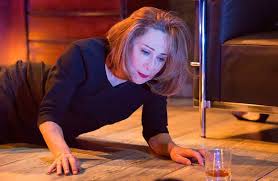
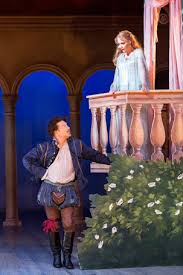
On Saturday night, we took everyone to see Kenneth Branagh’s production of “Harlequinade”. For the this year, Branagh has his own theatre company at the Garrick Theatre on Charring Cross Road, where he is putting on a series of plays in repertory. We missed getting tickets to “The Winter’s Tale” with Dame Judi Dench joining Branagh and others (they sold out in a flash), so we opted to see Sir Ken and Zoe Wanamaker in Terrance Ratigan’s “Harlequinade” and “On Her Own”. Zoe Wanamaker performed “On Her Own”, a fifteen minute monologue about a widow living on her own and having a conversation with her dead husband. It was very well done and maintained a certain dramatic tension as you wondered where it was going to go. It is the kind of thing that you don’t see in theater that often. “Harlequinade” is a farce, written around 1948, about a theater troupe touring the English hinterlands, bringing culture to masses as part of a post-war program that actually existed. (The play starts with a newsreel about the program fro the period.) Branagh plays the head of the company who is playing Romeo, although he and his wife are too old for the parts and sort of realize it. He is fatuous, egotistical and dotty and, as one of the other characters describes him, utterly incapable of doing anything other than acting. He is terrific and hysterical. The program notes say that Ratigan based the character on John Gielgud, who directed Ratigan in a student production of “Romeo and Juliet” while they were both at Cambridge, and on Alfred Lunt and Lynn Fontanne, who appeared in a number of his plays. There is a character in “Harlequinade” who is given one line in Romeo and Juliet by the Branagh character and is a running gag as he repeatedly rehearses and mangles it. It is the same part that Ratigan played when directed by Gielgud, and he is reported to have said his one line so badly that it always got a laugh. It is all a cute piece of fluff (which couldn’t quite figure out how to end) that was acted very well. It was written at the peak of Ratigan’s popularity. In less than ten years, his style of writing had been eclipsed by the likes of John Osborne and the post-war realists. (Branagh is going to be in Osborne’s “The Entertainer” in the spring, playing the role made famous by Lawrence Olivier.)
 nickinshoreditch